 Summarize this Article with AI
Physiotherapy is more than just a supportive healthcare service — it’s a field dedicated to restoring, maintaining, and promoting optimal physical function. With sedentary lifestyles and chronic pain issues on the rise, the demand for qualified physiotherapists is growing rapidly in India and abroad. The Bachelor of Physiotherapy (BPT) course is a popular undergraduate program that opens up numerous opportunities in hospitals, rehabilitation centers, sports facilities, and even private practice.
If you’re a student aspiring to make a mark in this hands-on, rewarding profession, this guide covers everything — from application to admission, documents required, and what to expect once you step into college.
What is BPT? Understanding the Course Structure
The Bachelor of Physiotherapy (BPT) is a 4.5-year undergraduate program designed to train students in physical therapy techniques used for pain relief, mobility restoration, and injury prevention. The course comprises four academic years followed by a compulsory six-month clinical internship.
Students are trained in subjects like:
- Human Anatomy and Physiology
- Electrotherapy and Exercise Therapy
- Biomechanics
- Orthopedics and Neurology
- Psychology, Pathology, and Microbiology
- Research Methodology and Biostatistics
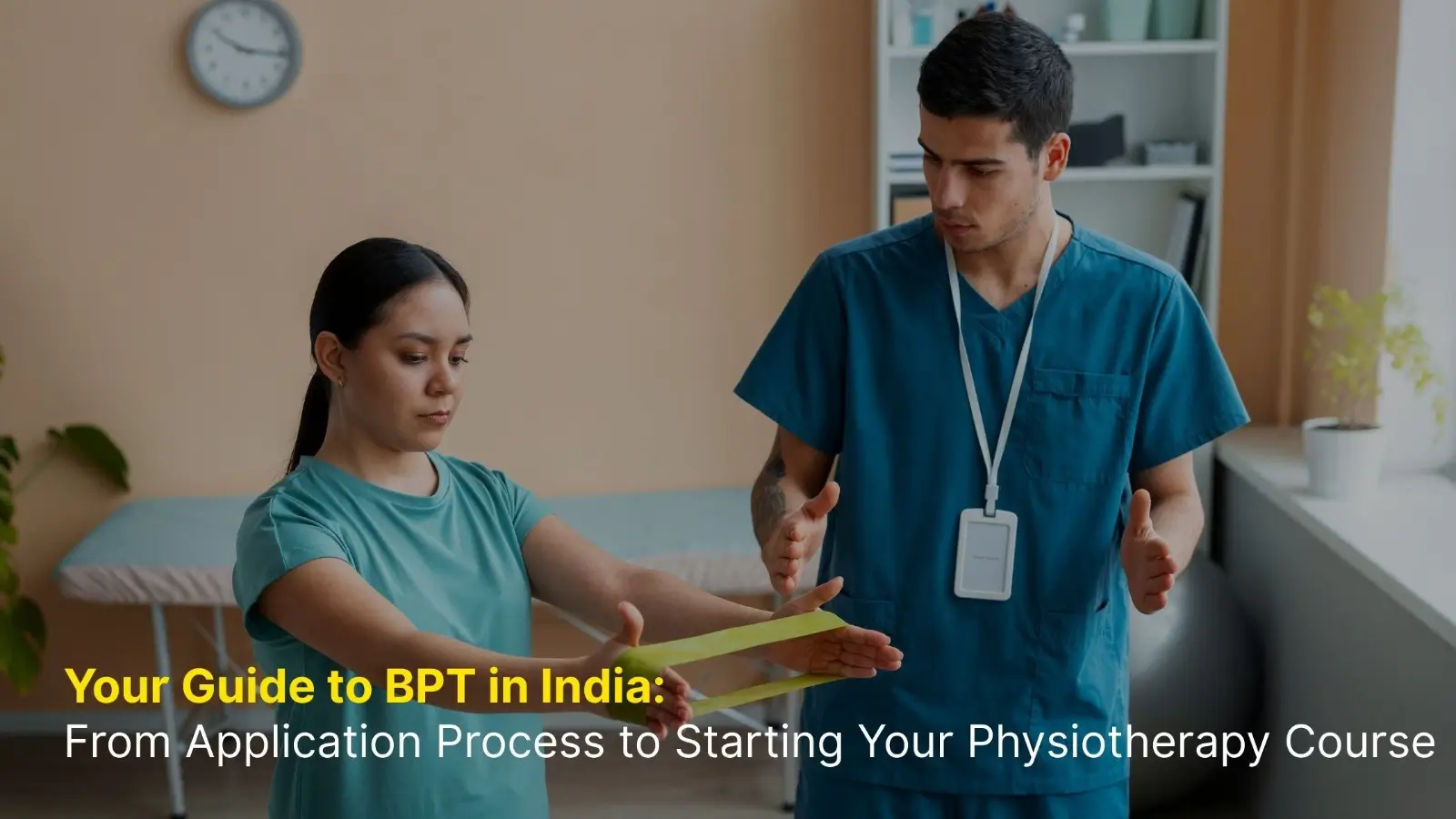
The course also includes extensive hands-on training in hospitals or physiotherapy departments, making it ideal for students interested in a practical, patient-focused profession.
Step 1: Eligibility Criteria to Apply for BPT in India
Before applying, students must fulfill the basic eligibility requirements:
- Age Limit: The candidate must be at least 17 years old by December 31 of the admission year (this date may vary by institution and is subject to change).
- Educational Qualification: Completion of 10+2 or equivalent, with Physics, Chemistry, and Biology (PCB) as core subjects from a recognized board.
- Minimum Marks: Generally, a 50% aggregate in PCB subjects is required for general category students (45% for reserved categories).
- Additional Requirements: Some institutions may require a medical fitness certificate and/or conduct personal interviews as part of the selection process.
Step 2: Entrance Exams and Admission Routes
Admission into BPT programs in India can occur via two main pathways:
1. Merit-Based Admission
Several private institutions and state colleges admit students based on their Class 12 board exam marks. The cut-off may vary depending on the competition and the institute’s reputation.
2. Entrance Exams
Some institutes require students to qualify in entrance examinations. Common ones include:
- NEET-UG: While NEET is primarily for MBBS/BDS, some universities consider NEET scores for BPT as well.
- IPU CET (for colleges under Guru Gobind Singh Indraprastha University)
- CUET (UG): Being adopted by more universities for various undergraduate programs.
- State-level CETs: Maharashtra, Karnataka, and other states conduct their own entrance exams for allied health sciences courses.
The exam pattern generally includes objective-type questions from Physics, Chemistry, and Biology.
Step 3: Application Process – Online & Offline
The application process for BPT differs based on the institution and whether they follow centralized counseling or direct admissions. Most institutions now accept online applications.
Online Application Steps:
- Visit the official website of the institution or examination authority.
- Register with basic details like name, contact info, and email.
- Fill in the application form with academic records and preferred courses.
- Upload documents such as passport-sized photo, signature, and certificates.
- Pay the application fee online via debit/credit card or UPI.
- Submit and download the filled application form and payment receipt for future reference.
Offline Process (for certain institutions):
- Purchase the application form from the institute or download it from their site.
- Fill it manually and attach self-attested copies of required documents.
- Submit the completed form to the admission office in person or via post.
Important: Dates for applications and exams are typically announced between March and June, but are subject to change each year.
Step 4: Counseling and Seat Allotment
After entrance exams or merit list declaration, eligible candidates are invited for the counseling process. This step is crucial for securing a seat in the college of your choice.
General Counseling Procedure:
- Online registration for counseling
- Filling and locking choices of colleges/institutions
- Seat allotment based on rank/merit and availability
- Document verification at the allotted college
- Final admission and payment of fees
Some institutions also hold spot rounds or management quota admissions for vacant seats.
Step 5: Required Documents for Admission
Here’s a list of commonly required documents for BPT admission:
- Class 10 and 12 mark sheets & passing certificates
- Transfer and Character Certificate
- Birth Certificate or Age Proof
- Entrance Exam Admit Card and Rank Card (if applicable)
- Passport-sized photographs
- Category Certificate (if applicable)
- Domicile Certificate (for state quota)
- Medical Fitness Certificate
Note: This list may vary slightly depending on the college, and requirements are subject to periodic updates.
Step 6: Stepping Into College – What to Expect in Year One
Once you’ve secured admission, your first year in BPT will be foundational. You’ll be introduced to key subjects like:
- Anatomy and Physiology: Understanding the human body inside-out.
- Electrotherapy: Using electrical currents to treat muscle issues.
- Exercise Therapy: Basics of therapeutic movements.
- Sociology and Psychology: Insight into patient behavior and society’s impact on health.
Along with classroom learning, you’ll also attend lab sessions and clinical demonstrations, giving you a taste of real-world physiotherapy from the start.
Most colleges also have orientation weeks, student mentoring programs, and sometimes hospital visits early on. It’s a great time to network with seniors and professors and start building your clinical mindset.
Career Outlook After BPT
Graduates of BPT can find employment in:
- Hospitals and Clinics
- Rehabilitation Centers
- Sports Facilities and Gyms
- NGOs and Health Camps
- Academic Institutions
- Private Practice
Further studies like MPT (Master of Physiotherapy) or specialization in areas like sports, ortho, or neuro physiotherapy can boost career growth.
Final Words
Pursuing a Bachelor of Physiotherapy in India is a promising choice for students passionate about healthcare and hands-on healing. From understanding the human body to helping patients regain mobility, the role of a physiotherapist is essential and deeply fulfilling. With the right guidance from experts like Suresh Dani Classes, students can navigate entrance exams and admissions confidently — and build a future rooted in care, compassion, and science.
Disclaimer: Admission dates, entrance requirements, and counseling processes are subject to change every academic cycle. Always refer to official portals of institutions or regulatory bodies for the most accurate and updated information.